July 2, 2026
SureThing vs Later: Which Is Better for SMB Social Ops?
Later is great for visual scheduling. But if you need AI to write, approve, and run your social ops end-to-end, here is how SureThing and Later actually compare.
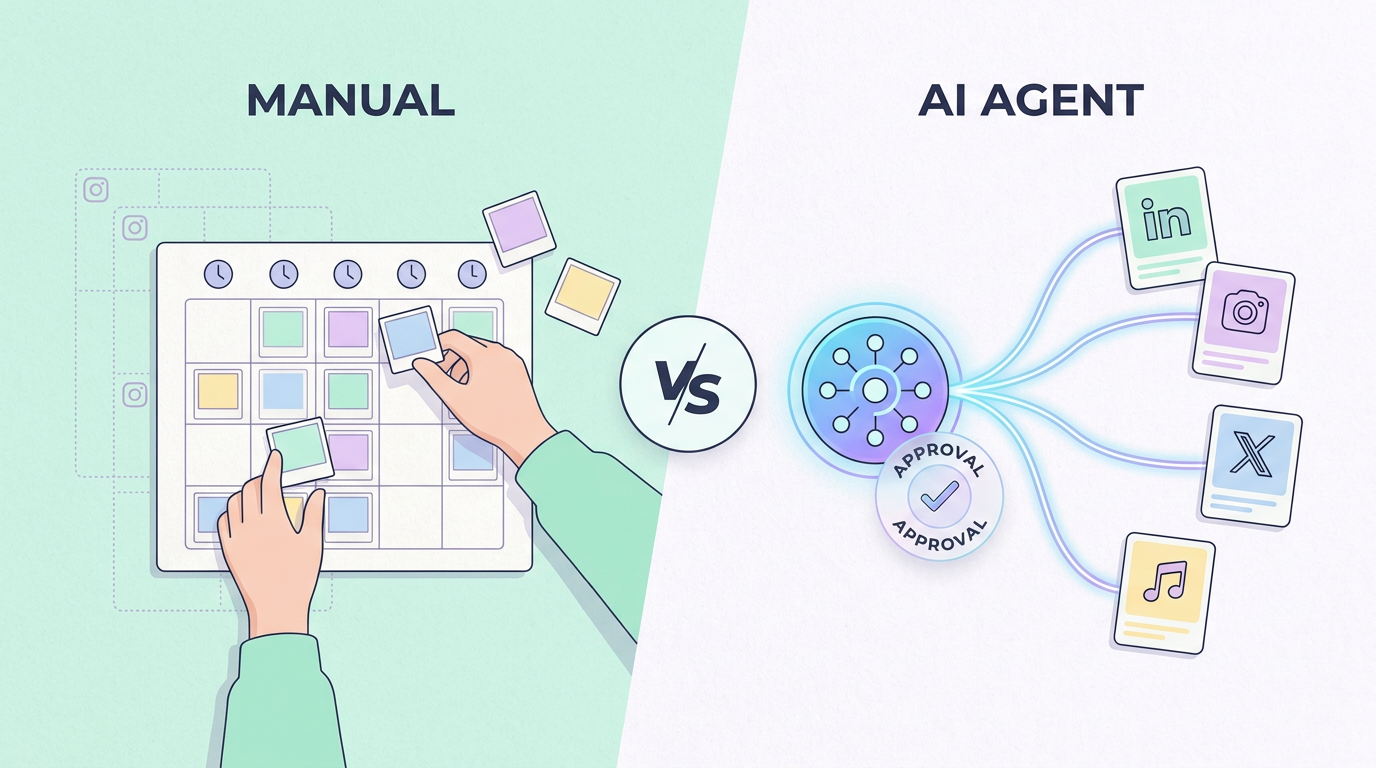
Later is genuinely good at what it does. If you run an Instagram-first brand, want a drag-and-drop visual calendar, and have a dedicated person doing the writing — Later delivers. It's clean, reliable, and built for that exact workflow.
Where it stops: Later schedules content your team creates. It doesn't write it, route it through approvals, or flag that your Tuesday post underperformed and suggest what to do differently next week.
For SMBs running lean marketing operations, that gap matters. The bottleneck usually isn't scheduling — it's the time spent creating, approving, and optimizing. That's a different problem, and it calls for a different kind of tool.
This comparison covers where Later genuinely excels, where it caps out for teams with real operational load, and why a growing number of mid-market SMBs are moving to an AI ops layer instead of a visual scheduler.
Later Is a Genuinely Good Visual Scheduler
Before the comparison, let's be direct about what Later is actually good at.
Later's visual content calendar is best-in-class for Instagram planning. You can drag images into time slots, preview your grid before publishing, and manage your link-in-bio through their Linkin.bio feature. For visual-first brands — fashion, food, lifestyle, consumer goods — it's one of the better purpose-built schedulers available.
It supports Instagram, Facebook, Twitter/X, LinkedIn, TikTok, Pinterest, and YouTube. The scheduling UI is clean. Auto-publishing is reliable. The media library keeps your assets organized without much setup.
If your business is Instagram-first, you have a content creator on staff, and you're primarily solving "how do we get posts out consistently" — Later is a reasonable answer to that question.
The ceiling shows up when social media stops being a calendar problem and becomes a labor problem.
Where SMB Teams Hit the Later Ceiling
Mid-market SMBs running real social operations tend to hit the same walls:
Writing still takes the most time. Later's AI caption assist helps with fill-in-the-blank copy, but it's not designed to generate a full content calendar from a brief or produce platform-native posts from scratch. Someone on your team is still doing the work.
Platform-specific formatting is manual. What lands on LinkedIn reads wrong on Instagram. Later doesn't adapt your draft per platform — you do. That's fine with one platform; it compounds with five.
Approval routing lives outside the tool. Later doesn't have a native approval workflow for teams. Sign-offs happen over Slack, email, or shared docs — all outside the scheduler, which creates a coordination gap every time.
Analytics tell you what happened, not what to do. Later's reporting covers engagement, reach, and follower growth. Useful data. But it doesn't close the loop — it surfaces numbers without feeding them back into content decisions.
Scaling content means adding headcount. If you want to post more, or post across more platforms, the answer is to hire more marketing support. The tool organizes the work; it doesn't absorb it.
None of this makes Later a bad product. It was designed for scheduling, and it solves that well. The issue is that for most mid-market SMBs, scheduling is not the bottleneck. Creating, approving, and optimizing is. That's where a different tool category comes in.
SureThing vs Later: Head-to-Head
Content Creation and AI Writing
Later: Offers AI caption suggestions and basic copy fills. Helpful for polishing or speed-drafting, but not capable of generating a full multi-platform content plan from a topic brief. The writing still happens on your side.
SureThing: AI does the writing. You give SureThing a topic, a product update, or a content brief. It drafts platform-specific posts for each channel — adapting tone, length, and format for LinkedIn, Instagram, Twitter/X, and others — then queues everything for your review. The content creation step largely disappears from your to-do list.
For teams spending three or more hours a week writing social content, this is the most material difference in the comparison.
Scheduling and Platform Breadth
Later: Strong scheduler across Instagram, Facebook, Twitter/X, LinkedIn, TikTok, Pinterest, and YouTube. Visual calendar is the signature feature. Auto-publishing is reliable and the UI is intuitive.
SureThing: Publishes across the same core platforms. The difference is that scheduling is a downstream step in the AI ops workflow, not the starting point. SureThing generates the content, routes it for approval, and then schedules and posts. The calendar is an output — not something your team manages manually.
Approval Workflows
Later: No native approval workflow. Multi-person teams handle sign-offs outside the platform — over Slack, email, or spreadsheet. Later's roots are in solo creator and small-team use cases with informal approval processes, and the product reflects that.
SureThing: Approval routing is built into the agent workflow. When SureThing drafts content, it surfaces a review card — you approve, request edits, or decline in one place. No separate thread, no chasing teammates. The agent holds the content until you sign off, then posts on schedule.
For SMB owners or marketing managers who need sign-off before anything goes live, this is often the deciding factor on its own.
Analytics and Reporting
Later: Clean analytics dashboard covering post performance, best posting times, engagement rates, and follower growth. Good for reviewing what happened. The data is accurate; the tool doesn't interpret it for you.
SureThing: Monitoring is part of the agent's ongoing ops loop. SureThing can flag underperforming content, surface patterns across posts, and feed those signals back into future content generation. It's a tighter connection between what happened and what gets written next.
Pricing
Later: Free plan available with limited features. Paid plans start around $18/month for individual use. Team and agency plans run significantly higher.
SureThing: Free plan available. Paid plans from $0/month depending on usage tier — the model is built around AI ops capacity rather than seat count on a scheduler.
Direct price comparison is less useful here because the tools are doing different jobs. The more honest question is: what's the total cost of running social ops with each tool? Later plus a content writer plus an ad hoc approval process plus someone reviewing analytics can add up fast. An AI ops layer that covers all of those steps often nets out cheaper — and faster.
Who Should Use Later
Later is the right pick if:
Your brand is Instagram-first and the visual grid is central to how you present your content
You have a dedicated content creator who owns the social calendar and produces the writing in-house
You're a small team (1–3 people in marketing) with simple, informal sign-off processes
Scheduling consistency is the core problem — not content creation speed or structured approvals
You're in a visual-forward category — lifestyle, fashion, food, consumer goods — where aesthetic planning matters alongside copy
In those contexts, Later is genuinely good. Don't swap a working tool for a different one just because a newer category exists.
Who Should Use SureThing
SureThing is the right pick if:
Social content creation is eating significant team time each week and you want AI to absorb the writing load
You need a structured approval step before content goes live — and you want it inside the tool, not managed over Slack
You're posting across multiple platforms with different formats and tones, and adapting content manually is a recurring drain
You're an SMB owner or marketing manager who wants social ops to largely run itself — you review and approve rather than create from scratch
You want performance signals feeding back into content decisions, not just sitting in a dashboard
The practical test: if social content takes more than three hours a week — writing, editing, approving, posting — SureThing is worth a serious look. That's the category of work it's designed to absorb.
You can see the full workflow in our social media automation agent overview, and see how teams are applying this in our roundup of the best AI agents for small business in 2026.
The Verdict: Scheduler vs. Operator
Later is a good visual calendar. It's not trying to be an AI operator, and it doesn't pretend otherwise. If scheduling and grid planning is the job to be done, it does that job well.
For mid-market SMBs where social media is a real operational weight — not just a scheduling task — a visual calendar isn't the upgrade you need. You need something that writes the content, handles approvals, posts on schedule, and reports back without you running every step manually. That's the difference between a scheduler and an AI social media manager.
Later is built for teams where a human runs social media and needs a good tool to organize the work. SureThing is built for teams where AI runs social media and a human reviews the output.
If you're evaluating tools in this space, our best social media automation tools roundup and the full guide to social media automation for SMBs go deeper on what to look for and what to skip. The short version: if you need a calendar, Later works. If you need the work done, the tool needs to be different.