August 7, 2026
Small Business AI: Automation & Growth by 2026
Discover how small business AI is transforming industries by enhancing customer service, automating operations, and driving growth toward 2026. Embrace AI for a competitive edge.
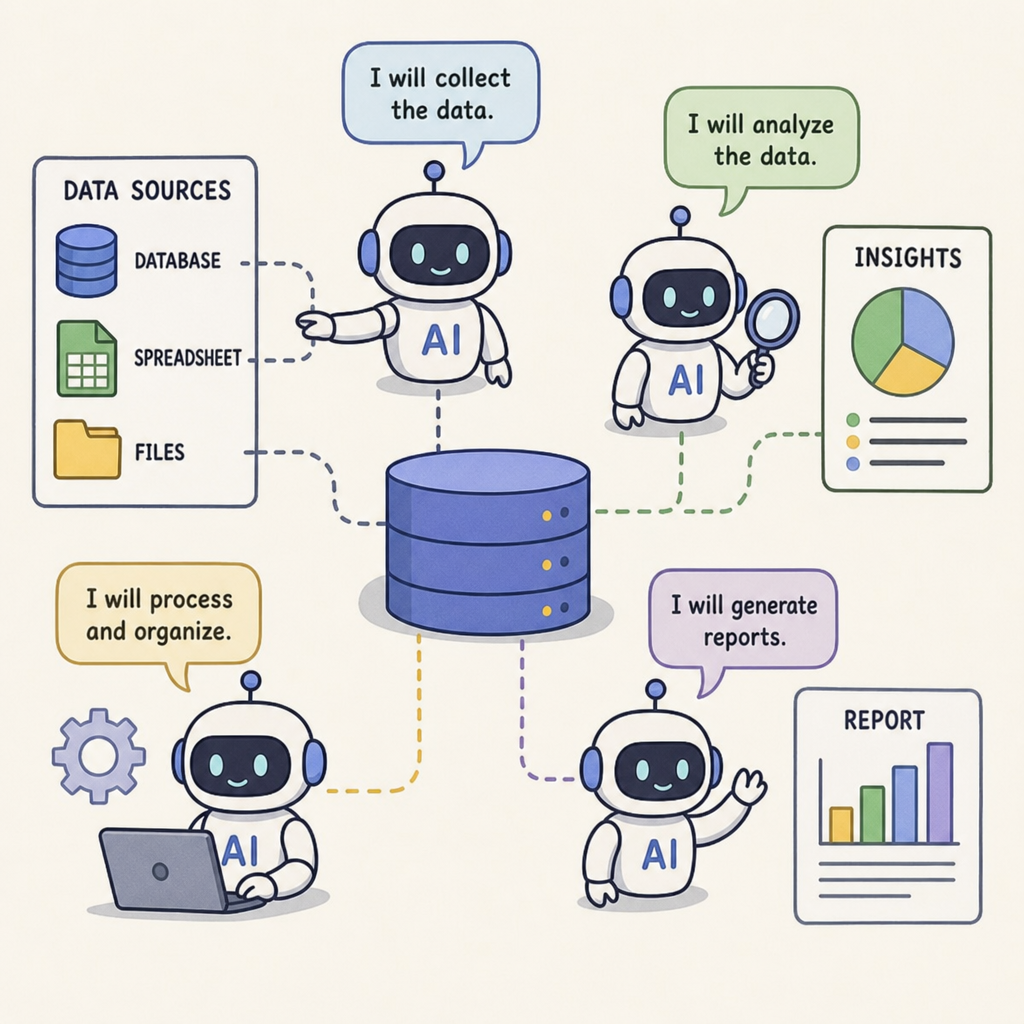
Small Business AI Agents
Artificial Intelligence (AI) is reshaping the business landscape. Small businesses are no exception to this trend. AI agents are becoming essential tools for growth and efficiency.
These intelligent systems can automate tasks, enhance customer service, and provide valuable insights. They offer small businesses a competitive edge in a fast-paced market.
AI technology is now more accessible and affordable than ever. This makes it an attractive option for startups and small enterprises.
By 2026, AI is expected to be a critical component of small business operations. It will drive innovation and streamline processes.
Understanding how to leverage AI can transform your business. It can lead to increased productivity and improved customer experiences.
What Are AI Agents? Understanding the Basics
AI agents are software programs that perform tasks autonomously. They mimic human behavior and learn from data. These agents can be embedded into various business systems.
AI agents operate based on algorithms. They analyze data and execute tasks without human intervention. This capability makes them valuable in business operations.
They come in different forms. Some are chatbots that interact with customers. Others are data analysis tools that assist decision-makers.
Key features of AI agents include:
Automation of repetitive tasks
Real-time data processing
Ability to learn and adapt

AI agents can be integrated into existing infrastructures. This integration helps small businesses optimize resources. Understanding AI agents is crucial for future-proofing your business. They are not just tools but partners in your growth journey.
Why Small Businesses Need AI Agents in 2026
AI agents will become indispensable for small businesses by 2026. They'll handle tasks that boost productivity and reduce operational costs. These agents ensure competitive advantage in a fast-evolving market.
AI brings efficiency by automating processes. It enhances customer service and personalizes marketing efforts. Businesses will find immense value in integrating AI solutions.
The future demands agility and adaptability. AI agents help small businesses meet these demands. They provide insights for informed decision-making.
Consider these crucial roles for AI agents:
Automating customer interactions
Optimizing supply chain management
Analyzing market trends
Adopting AI solutions prepares businesses for technological advancements. AI makes it possible to execute strategies with precision. Embracing AI technology is not just a choice but a necessity for future success.
Key Benefits of AI for Small Businesses
AI offers numerous advantages to small businesses. It boosts productivity while cutting costs significantly. Automation of repetitive tasks frees up valuable time.
AI enhances decision-making through data analysis. Businesses can gain insights, making strategies more effective. This leads to improved outcomes and profitability.
Customer experiences are personalized with AI. Tailored interactions increase customer satisfaction. This fosters loyalty and drives repeat business.
Market responsiveness improves with AI insights. Predictive analytics helps anticipate trends. Businesses can adapt proactively, staying ahead of competitors.
Key AI benefits include:
Streamlining operations for efficiency
Improving marketing strategies
Enhancing customer service
Providing real-time data insights

Embracing AI technology keeps small businesses competitive. It equips them with tools necessary for growth. As the digital landscape evolves, AI integration becomes a fundamental asset.
AI Customer Service Automation: The 2026 Update
AI has revolutionized customer service. By 2026, it’s set to redefine standards. Businesses of all sizes are leveraging its potential.
AI-powered chatbots provide 24/7 customer support. They handle inquiries swiftly. This reduces the burden on human staff, allowing them to focus on complex issues.
AI tools offer personalized customer interactions. They learn preferences from past interactions, enhancing satisfaction. This personalized approach boosts loyalty and retention.
The benefits of AI customer service include:
Instant, round-the-clock support
Improved response accuracy
Enhanced customer satisfaction
Cost-effective service solutions

by Bhavya Patel (https://unsplash.com/@bhavya_p)
With AI, small businesses gain efficiency and customer insight. This strengthens their market position. As 2026 approaches, AI's role will only expand, making customer engagement smarter and more effective.
AI Marketing Strategies for Small Businesses
Small businesses are turning to AI to refine marketing strategies. AI helps in targeting audiences more precisely and effectively. It maximizes return on investment by providing insightful analytics.
These tools analyze vast amounts of data to reveal customer behavior patterns. This enables personalized marketing campaigns. Such precision enhances customer engagement and conversion rates.
AI also streamlines content creation. It suggests optimal content types and posting times, improving campaign efficiency. This leads to more effective outreach with minimal manual effort.
Key elements of AI marketing strategies include:
Predictive analytics for targeted advertising
Automated content suggestions
Customer behavior tracking
Real-time campaign adjustments

by Deng Xiang (https://unsplash.com/@dengxiangs)
Embracing AI marketing allows small businesses to compete with larger firms. It levels the playing field by providing sophisticated tools. This technological edge will be crucial for growth and success in the coming years.
AI in Retail: Transforming the Customer Experience
AI technology is revolutionizing the retail sector. From personalized shopping experiences to efficient inventory management, AI drives change. Retailers benefit from improved customer satisfaction and loyalty.
AI systems analyze shopping data to tailor experiences to individual preferences. Customers feel understood when stores suggest relevant products. This personalization increases the likelihood of purchases.
In addition, AI optimizes back-end processes like stock control. Smart systems predict demand, reducing overstock and shortages. This maintains product availability while minimizing costs.
Key enhancements in retail through AI include:
Personalized product recommendations
Efficient supply chain logistics
Dynamic pricing strategies
Enhanced customer service through AI chatbots

by Cova Software (https://unsplash.com/@covasoftware)
Retailers leveraging AI maintain a competitive edge. They adapt faster to market changes and consumer trends. This adoption will be key for retail success as the industry evolves.
Small Business Automation: Streamlining Operations
Automation is a game-changer for small businesses. By implementing AI, businesses can streamline operations and reduce manual work. This leads to increased efficiency and productivity.
AI tools automate mundane tasks, allowing focus on strategic growth areas. Businesses save time on payroll, inventory, and customer service. Efficiency gains translate into cost savings and competitive advantages.
Business owners benefit from AI automation in various ways:
Reduced errors in routine operations
Improved time management
Enhanced productivity without increasing staff
AI-driven automation also provides consistent results, ensuring reliability. Systems can run 24/7 without fatigue, maintaining quality and efficiency. This continuity supports uninterrupted business operations.

by SpotOn (https://unsplash.com/@spotonpos)
Moreover, as AI technology advances, it becomes more accessible and affordable. Small businesses now have powerful tools that were once reserved for large enterprises. Embracing automation will be essential for future growth.
AI for Startups: Gaining a Competitive Edge
AI offers startups an opportunity to stand out in crowded markets. By leveraging AI, startups can optimize operations and make data-driven decisions. This leads to better resource allocation and strategic planning.
For startups, AI can:
Enhance customer targeting and engagement
Streamline product development through data insights
Improve operational efficiencies
AI tools provide deep insights into market trends. They help identify new opportunities, enabling startups to pivot quickly. This adaptability is crucial for gaining a competitive edge.
Startups adopting AI early can position themselves as industry leaders. Such foresight helps them scale faster, meet customer demands efficiently, and increase market share. As AI technology evolves, its role in startups will only grow.
Business Intelligence AI: Smarter Decisions, Faster Growth
Business Intelligence AI transforms how small businesses understand their data. These tools analyze vast amounts of information quickly. They provide actionable insights that drive strategic decisions.
With Business Intelligence AI, businesses can:
Detect market trends and customer preferences
Optimize inventory and supply chain processes
Enhance financial forecasting and budget planning

by Steve A Johnson (https://unsplash.com/@steve_j)
AI allows small businesses to anticipate changes and adapt swiftly. This proactive approach can significantly boost growth and competitive positioning. As AI continues to advance, its ability to generate insights will improve. For small businesses, embracing these tools can facilitate faster and smarter growth. Advanced analytics leads to opportunities previously unseen, making AI a crucial ally in business strategy.
How to Get Started with Small Business AI Agents
Beginning with AI agents may seem daunting, but it's more straightforward than it appears. Start by identifying processes that need enhancement or automation. Focus first on areas with repetitive tasks or common customer interactions.
Consider the following steps to integrate AI into your business:
Assess your current technology and data capabilities
Choose AI tools tailored to your business needs
Train employees to utilize AI effectively
Adopting AI doesn't require complete overhauls. Gradually implementing AI solutions ensures a smooth transition. Remember, patience and adaptability are keys to successful AI integration. With proper planning, small businesses can harness AI effectively.
Overcoming Challenges and Ensuring Ethical AI Use
Integrating AI presents challenges, such as data privacy concerns and ethical dilemmas. Small businesses must tackle these proactively. Ensuring data security and transparency is essential for building trust.
To address these challenges, businesses should:
Establish clear data privacy policies
Ensure AI systems are transparent and unbiased
Regularly update and audit AI applications
By prioritizing ethics, small businesses can build trust with customers and leverage AI responsibly, fostering both growth and credibility.
The Future of Small Business Technology: What’s Next?
The future of small business technology promises innovation and transformative growth. AI will play a pivotal role in shaping this landscape. Advances in AI could redefine operational strategies and enhance customer experiences.
Small businesses should prepare for these trends:
Greater reliance on AI-powered analytics
Increased use of virtual and augmented reality
Growing emphasis on personalization through AI

by DL314 Lin (https://unsplash.com/@dickenslin76)
Staying ahead in technology adoption can provide small businesses with a significant competitive edge. Embracing these innovations will ensure they remain agile and adaptable in the ever-changing market environment.
Conclusion: Embracing AI for Small Business Success
Integrating AI can transform small businesses, driving efficiency and innovation. By embracing AI, companies unlock new opportunities for growth and competitive advantages.
Staying informed about AI trends will help businesses make data-driven decisions and offer better customer experiences. Small businesses should take proactive steps to adopt AI, ensuring they harness its full potential.
As AI becomes more accessible, its role in small business success is undeniable. To thrive, businesses must embrace AI technology and its transformative benefits.