June 24, 2026
SureThing vs Claude Tag: Same Vision, a Different Bet
Anthropic's Claude Tag puts one shared Claude in your Slack channel — its own identity and memory. We think they're right about the future. We're betting on the opposite starting point.
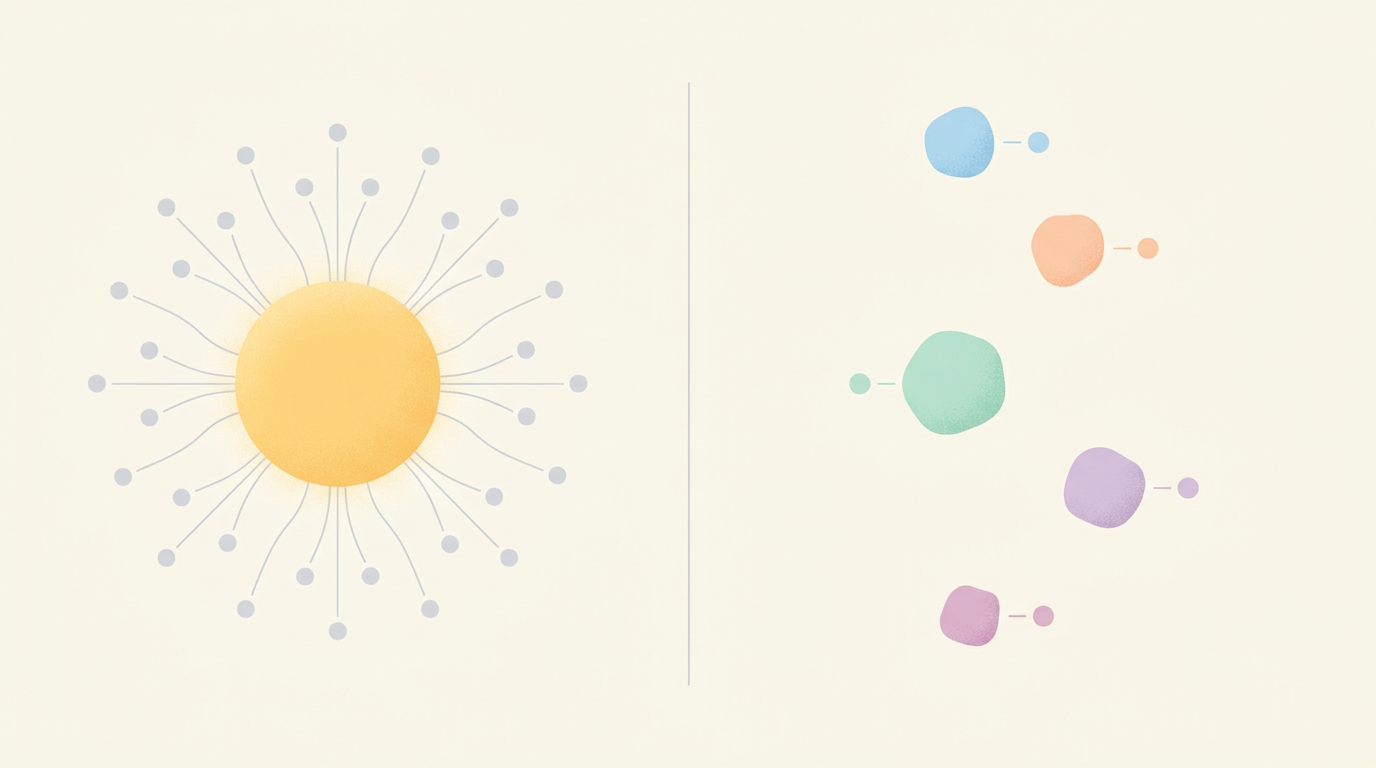
Yesterday Anthropic shipped Claude Tag. Tag Claude into a Slack channel and it works in the channel with you — proactive, multiplayer, with its own identity and its own memory. One Claude, shared by the team, learning your company one message at a time.
Our first reaction wasn't "here's why they're wrong." It was: they're right about where this is going. An AI teammate with a name and a memory, not a chatbot that forgets you between sessions — that's the future we've been building toward too.
So this isn't a takedown. A SureThing vs Claude Tag piece that pretends Anthropic fumbled would be lazy and untrue. Same vision. Different bet. The interesting part is what each of us bet on — and it comes down to one word: default.
What Claude Tag actually is
Give it real credit, because it's a sharp design:
One identity per channel. Inside a Slack channel, there's a single Claude everyone talks to. Anyone can see what it's been working on. That shared context is genuinely useful.
Memory that persists. It learns the company over time instead of starting cold every thread. Enterprise memory, by design.
Access governed by an admin. IT provisions what it can touch — a baseline for the workspace, step-up credentials scoped to sensitive channels, and a DM mode where it can run as you with your own access.
Read that last layer carefully. Claude Tag does have a personal mode. We're not going to pretend it doesn't — that's the kind of strawman that gets you dunked on. The personal version exists. It just lives off to the side, as a DM.
Where we completely agree
An AI-native team isn't a row of chatbots. It's agents with identity, with memory, that compound what they learn. Anthropic clearly believes that. We've staked the whole company on it.
Great minds, same conclusion. The split isn't the destination. It's where you plant the center of gravity.
The bet underneath
Claude Tag starts from the company. The primary unit is a shared agent, configured by IT, sitting in a channel as the team's common brain. You get a personal agent by exception — open a DM, and it runs as you. Powerful. But it's a side door off the main room.
SureThing starts from the person. Day one, you spin up your own twin. No IT ticket, no admin provisioning, no waiting for someone to scope your access. It carries your memory, learns your way of working, and compounds your knowhow — not the org's average.
That's the whole bet in one line:
Their AI is yours by exception. Ours is yours by default.
An AI agent for teams built around a shared company brain will always make the personal layer the exception. A personal AI agent at work built around the individual makes the team the thing you compose upward, from twins that already know their owner cold.
What "yours by default" looks like
Not abstract. Concrete. On an AI-native team running SureThing, every person has their own twin from the start:
Mark in Sales — a twin that remembers every deal he's worked, which objections close, how he writes a follow-up.
Jay in Dev — a twin that knows his stack, his repo conventions, the bug patterns he's chased before.
Ivy in Media Buying — a twin that holds every creative test, every CPA curve, the audiences that actually convert.
Caliana in Social — a twin that's learned her voice, her best-performing hooks, her posting rhythm.
Alyson in Product — a twin that tracks every spec, every user interview, every shipped decision.
Five people, five twins, five distinct bodies of knowhow — compounding in parallel. When they need to work together, the twins talk to each other. The team is the composition. The individual is the unit.
Why the default decides everything
Here's the part we actually care about. The business knowhow that wins doesn't live in a company brain. It lives in the person doing the work — and it should compound for them.
When the agent is shared by default, the knowhow pools into one org-owned memory. Useful, but it's the company's average, and it's the company's to keep. When the agent is personal by default, the knowhow compounds with the person who earned it. Mark's instinct for a deal stays Mark's edge. Ivy's read on an audience stays Ivy's edge.
That's not a small distinction. Once everyone on a team runs the same shared, standardized agent, the team converges on the same answers — and the edge competes away. The margin was always in the individual: their taste, their non-consensus calls, the things only they know. Start from the person, and you keep that. Start from the company brain, and you average it out.
So, same vision — which bet do you want?
If your world is a large org where IT should govern one shared agent in a channel, Claude Tag is a genuinely strong answer, and we'd tell you so.
If you're a founder, an operator, a small team — and you want every person to own a twin that makes them sharper, that they keep as they grow — that's the bet we made. Everyone gets their own from day one. That's SureThing.
Same future. We just start it from you, not from the company.
Your twin. Your knowhow. Yours to keep.