July 7, 2026
Best Social Media Scheduler 2026: An Honest Roundup
Buffer, Later, Hootsuite, Metricool, Publer — what each social media scheduler is best at in 2026, what it costs, and how to pick the one that fits your work.
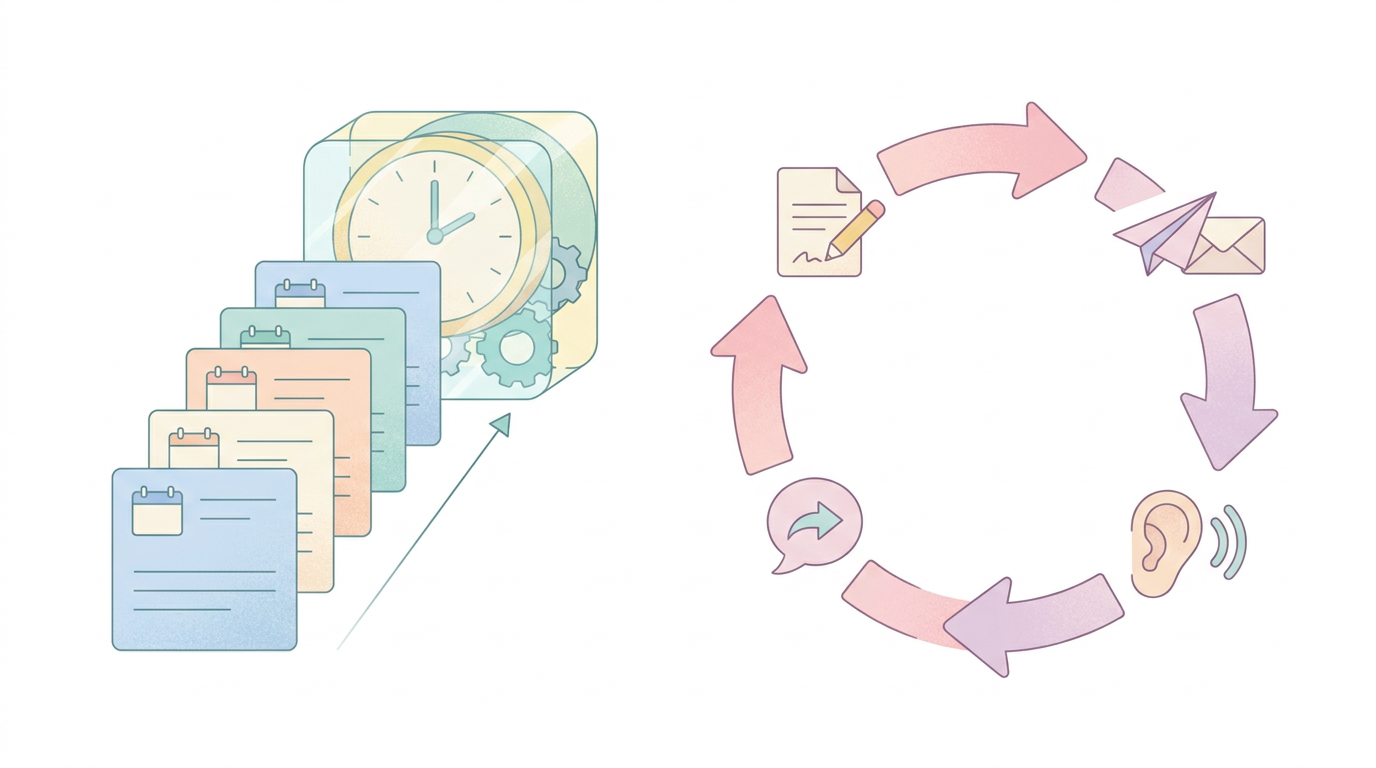
You don't actually want a scheduler. You want the posts to go out — on time, on brand — without you babysitting a calendar. The scheduler is just the tool we've all agreed to use to get there.
So before you pick one, get honest about what you're really buying: a queue. A good queue, sometimes a beautiful one. But a queue still needs someone to fill it, watch it, and answer the comments it brings in. Below is our take on the best social media schedulers in 2026 — what each one is genuinely great at, what it costs, and the one line that decides whether it's right for you.
What a scheduler actually has to do
Strip away the feature lists and every scheduler is judged on four things:
Channels it supports. Instagram, TikTok, LinkedIn, X, Threads, Bluesky, Pinterest, Facebook, YouTube. The gap between "11 platforms" and "the 3 I post to" is what you're paying for.
How fast you can fill the queue. Drag-and-drop calendar, bulk upload, an AI assistant that drafts captions. Friction here is the whole game.
What it tells you afterward. Analytics, best-time-to-post, competitor benchmarks. Most tools have this; depth and history length vary.
What it costs as you grow. Per-channel, per-user, or per-brand pricing decides whether the bill stays flat or balloons at your third account.
Keep those four in mind. Every tool below wins on some and loses on others.
The best social media schedulers in 2026
Buffer — best plug-and-play value
Buffer is the one we'd hand a first-time founder. The free plan covers 3 channels with a real AI assistant — no trial clock ticking — and paid plans start at $6 per channel per month. It supports 11+ platforms including Bluesky and Threads, has a clean drag-and-drop calendar, and keeps analytics for up to 6 months.
The cut: per-channel pricing is friendly when you post to three places and brutal when you post to ten. Great for focused creators, less so for sprawling multi-account operations.
Later — best for visual-first brands
If your growth lives on Instagram and Pinterest, Later's grid preview is still unmatched. You see the feed before it ships. Plans run from $18.75/month (Starter, annual) and climb with social sets and seats. Link-in-bio, UGC collection, and a social inbox round it out.
The cut: you're paying a premium for visual planning. Worth it for aesthetics-driven accounts, overkill if your channels are text-led like LinkedIn or X.
Hootsuite — best for big teams
Hootsuite is built for the social-media department, not the solo founder. Unlimited scheduling, the OwlyGPT assistant, social listening, a unified inbox with DM automations, and competitor benchmarking. There's no free plan, and pricing starts at $99 per user per month.
The cut: that per-user floor means a three-person team is north of $300/month before add-ons. If you have a team that lives in social all day, it earns its keep. If you're one person, it's a different product than the one you need.
Metricool — best analytics-plus-scheduling combo
Metricool folds organic scheduling, paid-ads tracking (Meta, Google, TikTok), and competitor analysis into one dashboard. The free tier gives you 1 brand and 20 posts a month; Starter is $20/month for 5 brands, billed annually. Pricing scales by brand, not by seat — which is why agencies love it.
The cut: per-brand pricing is the right model if you juggle clients, an awkward one if you're a single account that just wants posts out the door.
Publer — best budget pick
Publer is the value play. Solid cross-platform scheduling and bulk options from around $12 per user per month, one of the lowest entry points that still feels professional. Fewer bells than Buffer or Metricool, but it does the core job without drama.
The cut: lean on features, heavy on price-to-value. A fine choice when scheduling is genuinely all you need.
The thing every scheduler shares
Here's the pattern. Buffer, Later, Hootsuite, Metricool, Publer — every one of them is excellent at the same narrow job: taking content you've already made and releasing it on a timer.
That's the queue. And the queue is the easy part.
The hard parts sit on either side of it. Someone still has to write the posts. Someone has to watch what landed and what flopped. Someone has to answer the comments and DMs the posts pull in. A scheduler hands all three back to you. It moved the publish button; it didn't move the work.
For a social-media manager with hours to spend in a dashboard, that's a fair trade — the dashboard is the job. For a solo founder, a consultant, or a creator who is also doing everything else, it's just one more tab to keep alive.
Our different bet
We build SureThing for the people the schedulers weren't designed for: non-technical founders and creators who don't have a social team and don't want to become one.
Same vision — your posts go out reliably. Different bet on who does the work. Instead of handing you a faster queue to fill, SureThing runs the loop:
Drafts the posts in your voice, from whatever you're already working on.
Schedules and posts them across your channels.
Watches what happened and tells you what's worth doing again.
Flags the replies that actually need you, and drafts the rest.
A scheduler is a tool you operate. This is closer to a teammate who handles the posting so you can stay on the work that only you can do. If your problem is "I don't have time to fill a content calendar," a better calendar isn't the fix.
So which one should you pick?
Honestly, it depends on which problem you actually have:
You just need posts out cheaply → Buffer (free or $6/channel) or Publer ($12).
Your brand is visual → Later, for the grid preview.
You want analytics and ads in one place → Metricool.
You run a social team all day → Hootsuite.
You don't want to operate a dashboard at all → that's the bet we're making with SureThing.
Pick the tool that matches the job in front of you. If the job is "schedule my posts," any of the five above will serve you well. If the job is "stop being the person who has to remember to post," that's a different category — and it's the one we're building.
The best scheduler is the one you'll actually keep using. The best outcome is not having to.